


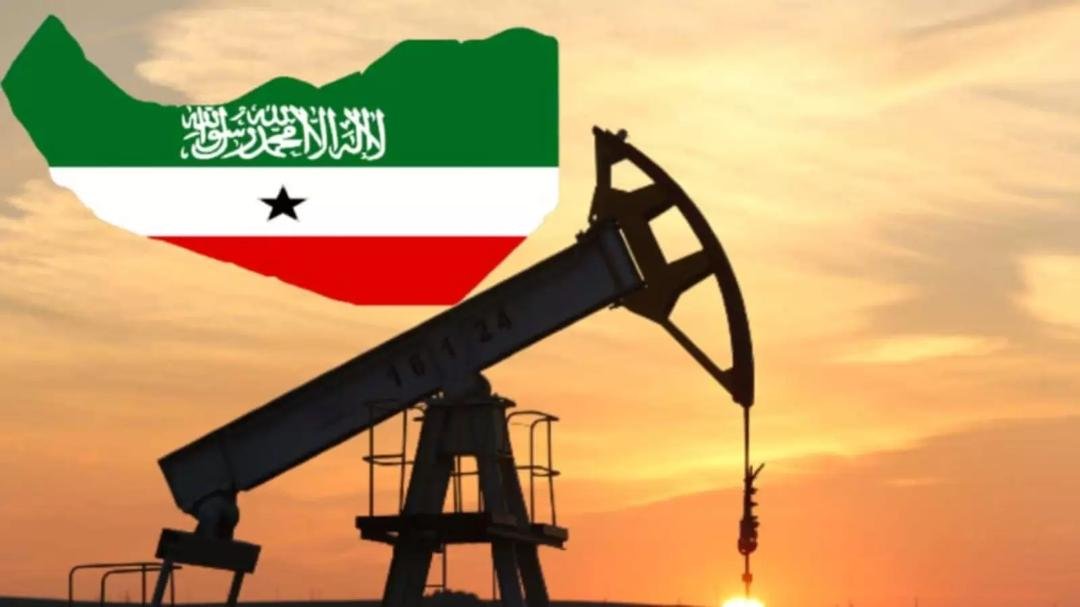
As global attention focuses on Red Sea security and the strategic maritime chokepoints of the Strait of Hormuz and the Bab el-Mandeb Strait, critical minerals are becoming another arena of global competition among major powers, particularly between China and the United States, as they seek to secure and control strategic resources. Regions with the potential to supply these resources are therefore gaining greater geopolitical and economic significance.
Critical minerals are increasingly important to modern industries, particularly renewable energy, electric vehicles, advanced electronics, aerospace, artificial intelligence, and defense technologies.
China dominates global processing and refining of several critical minerals, including gallium and silicon, which are vital to advanced technologies, energy systems, and defense industries. This has created significant concerns for the U.S. government and has contributed to President Donald Trump’s emphasis on countering China as a major strategic priority.
Beyond its strategic location, Somaliland possesses vast untapped natural resources and potential deposits of critical minerals, including lithium, chromium, nickel, zinc, lead, and platinum-group metals.
These resources could potentially serve as an alternative supply chain for U.S. industries, reducing dependence on China and other emerging supply routes, including those associated with Ukraine.
Somaliland’s commercially viable deposits, geographic position, and distance from Chinese-controlled mining and processing networks could potentially enhance its strategic relevance to the United States and its allies.
Recently, Somaliland has attracted interest from potential Western mining investors. A large delegation of American surveyors, researchers, and technical specialists visited Somaliland, where they met with officials from the Ministry of Energy and Minerals, including the Director General, and travelled to the Sanaag Region, known for its natural-resource potential. The delegation was received by the Governor of Sanaag Region, Mohamed Rage.
The visit should not necessarily be characterized as a formal mineral-exploration mission. Rather, it appeared to involve surveying and information-gathering activities aimed at assessing Somaliland’s natural resources, geography, and broader investment potential.
In July 2025, President Abdirahman Mohamed Abdullahi Irro told Bloomberg that Somaliland could offer the United States access to a strategic military base near the Red Sea and critical minerals, including lithium, in the context of discussions surrounding formal diplomatic recognition.
In August 2026, President Irro reiterated this approach during meetings with foreign diplomats, ambassadors, and international organizations in Nairobi, Kenya, stating that Somaliland does not approach international partners with a “begging bowl,” but instead seeks equal partnerships, investment, and mutually beneficial economic cooperation rather than aid.
Somaliland President Abdirahman Mohamed Abdullahi Irro, accompanied by a large delegation include members of the cabinet and business leaders, is expected to make his first visit to the United States in the coming days and meet with senior officials from the Trump administration.
These important meetings are expected to address the interests of both sides, regional security, particularly security in the Red Sea, and investment opportunities available in the Republic of Somaliland. Critical minerals and other natural resources are expected to be among the key areas of discussion, including opportunities for U.S. companies to invest in Somaliland’s mining sector and other natural-resource industries.
Taken together, Somaliland’s untapped natural resources and strategic location, alongside its relative political stability and port infrastructure, could enhance its strategic importance to the United States and its allies. These advantages could also provide Somaliland with additional economic and geopolitical leverage in its pursuit of international recognition.
The following interview explores how Somaliland’s untapped natural resources, combined with its strategic location, could strengthen and leverage its case for international recognition.
Interview Analysis with Eng. Mohamoud Mohamed, Petroleum Expert
Introduction
The Republic of Somaliland, with a functioning government and a history of democratic transitions since reclaiming its sovereignty in 1991, is gaining renewed interest—not only for its political stability but also for its natural resource wealth. In this exclusive analysis, the Laasgeel Institute sits down with Eng. Mohamoud Mohamed, a seasoned petroleum expert, to discuss how Somaliland’s rich yet underexplored natural resources—particularly oil, gas, and minerals—could play a pivotal role in its quest for international recognition.
LIPS’s Question One: Somaliland is believed to possess abundant untapped natural resources. Could you provide a general overview of these resources and what is currently known about them?
Ans’s Eng– Mohamed – Somaliland is part of the East African Rift system and shares geological similarities of Mesozoic era with proven hydrocarbon basins in neighboring countries such as Ethiopia, Somalia, and Yemen. These regions have oil and gas discoveries, indicating potential in Somaliland.
Prove of potential hydrocarbons in Somaliland:
Geological Similarity:
The Republic of Somaliland shares geological features with oil-rich basins in the Gulf of Aden, Yemen, and southern Ethiopia. These regions belong to the same geological systems, such as the Jurassic rift basins, which are known to host significant hydrocarbon deposits.
HISTORICAL DATA
Somaliland has a significant legacy of petroleum exploration, with a total of 21 wells drilled historically, including 2 offshore wells. Several of these wells recorded technical discoveries, notably with oil exhibiting a quality of 33.6° API, indicating the presence of light crude. In addition, other wells showed clear signs of oil, further supporting the region’s strong hydrocarbon potential. While commercial production has yet to be achieved, the existing data underscores the promising geology of Somaliland, suggesting that with continued exploration efforts, an economic discovery is within reach.
Reason Seismic Surveys:
Several international companies, TGS, Genel Energy, and Rak Gas have conducted seismic surveys in Somaliland. These surveys revealed promising geological structures, including large sedimentary basins that could trap oil and gas.
Surface Seeps:
Hydrocarbon seeps have been identified in certain areas of Somaliland, such as coastal (near Berbera), eastern, and southern regions. These natural leaks of oil and gas from underground reservoirs to the surface indicate potential subsurface hydrocarbons. The sedimentary basins in Somaliland, particularly the Berbera Guban, Odweyne, and Nugal Basins, have favorable geological conditions for hydrocarbon accumulation.
LIPS’s Question Two- The President, Donald Trump is regarded as a transactional leader. Considering Somaliland’s rich natural resources and strategic positioning, could these assets potentially pave the way for international recognition through a mutually beneficial deal with Trump’s administration?
Ans’s Eng Mohamed– Yes if there is a mutual interest, the idea that a Trump administration could be more open to a transactional deal involving Somaliland isn’t faraway. Trump’s leadership particularly in foreign policy, has often been driven by pragmatism, direct benefits, and transactional deals rather than long-term multilateral diplomacy. If Somaliland can present a compelling and convincing case that outlines “what’s in it for the U.S.”, there could be room for negotiation.
Here are some points on how Somaliland could potentially sell its geopolitical importance
Strategic Location
Somaliland’s location near the Bab El-Mandeb Strait and the Gulf of Aden gives it significant geopolitical importance. Establishing a U.S. military or naval presence at the Berbera Port could serve as a strategic counterbalance to China’s expanding influence in Djibouti—where it maintains a military base—and across the broader Red Sea region.
Natural Resources
Oil & Gas: Promising oil reserves with ongoing exploration; potential for natural gas.
Minerals: Rich in gemstones, gypsum, limestone, and possibly gold and rare earths.
Fisheries: Untapped marine resources along the Gulf of Aden.
Livestock and Agriculture: Strong livestock exports; potential for crop farming with investment.
Renewable Energy: High potential for solar and wind energy development.
Counterterrorism Partnership
Somaliland’s relative stability and its commitment to fighting terrorism in a volatile region could be a selling point. Trump emphasized defeating terrorism with regional partners — and a stable, pro-Western Somaliland fits that narrative.
Economic Opportunity for U.S. Firms
Pitching investment deals in infrastructure, telecoms, agriculture, and logistics with favorable terms for U.S. firms could appeal to Trump’s business-first mentality.
Recognition in Exchange for a Deal
A carefully crafted “deal package” could include recognition in exchange for:
Exclusive military access,
Resource concessions,
Intelligence-sharing agreements, and trade benefits.
The State Department and Congress still play major roles in recognition, even under Trump’s administration. Any move would face pushback from Somalia, which illegally claims Somaliland Sovereignty, the African Union, and others unless handled diplomatically. Recognition would likely come incrementally (e.g., through deeper engagement, special envoy appointments, security pacts) before any official recognition.
LIPS’s Question Three: What types of minerals have been discovered in Somaliland, and what is currently known about their estimated quantities and economic viability?
The Republic of Somaliland is rich in various mineral resources, although most are still in the early stages of exploration:
Gemstones: High-quality deposits of emeralds, garnets, aquamarine, and other precious stones have been found.
Industrial Minerals: Significant reserves of gypsum, limestone, and kaolin are available—important for construction and cement production.
Precious Metals and Rare Earth Elements: There is growing interest in the presence of gold, copper, and rare earth elements, though detailed surveys are needed to estimate commercial viability.
Conclusion
As Somaliland continues to demonstrate stability and potential, the strategic exploitation of its untapped natural resources, especially oil, gas, and minerals, could serve as a bridge toward international legitimacy. Eng. Mohamoud, emphasizes the need for sustained investment in exploration and a smart, sovereign resource strategy that balances economic benefit with diplomatic leverage. The road to recognition is complex, but Somaliland may have the right tools beneath its surface to shape its future on the global stage.
About the interviewee, Eng. Mohamoud Jama Mohamed is an expert in the oil and gas sector. He has served as a Senior Logging Engineer with the Abu Dhabi National Oil Company (ADNOC) and as a Senior Hydrogeologist with the United States Geological Survey (USGS).