


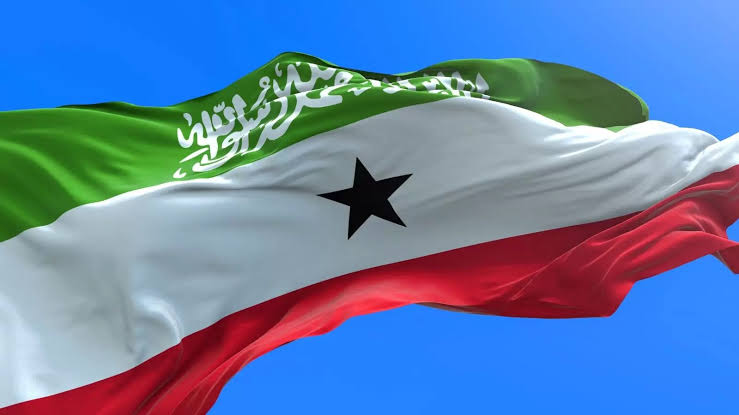
We at the Laasgeel Institute for Policy Studies and Research Analysis, representing over 6.2 million citizens of Somaliland, warmly welcome the State of Israel’s formal re-recognition of Somaliland on 26 December 2025, following a prolonged period of political and diplomatic isolation. The Republic of Somaliland’s recognition by the State of Israel is grounded in historical and legal facts, not in secessionist movements.
On 26 June 1960, Somaliland gained independence from Britain, becoming the first independent state in the Horn of Africa and the 17th independent state on the African continent. The expected union between the State of Somaliland and the Italian UN Trusteeship territory to form a third entity known as the Somali Republic did not legally materialize. As a result, the Somali Republic did not constitute a valid legal entity, as there was no legally ratified treaty registered under Article 102 of the UN Charter.
In 1991, after decades of marginalization and systematic violence, including ethnic cleansing, Somaliland rightfully reclaimed its sovereignty. Its case is therefore not one of secession, but rather the restoration of an independent status that had already been attained.
Somaliland’s historical and legal case is unique. Somaliland achieved de jure independence in 1960 and never legally transferred its sovereignty to another state. The 1960 Union Act was never ratified by Somaliland, while Somalia unilaterally implemented its own version in 1961, in clear violation of international legal norms. Public opposition to the union was demonstrated in the June 1961 constitutional referendum, in which approximately 60% of Somaliland voters rejected Somalia’s constitution (Walls, 2009).
Further evidence of the absence of a legal union emerged in December 1961, when Somaliland military officers attempted to restore Somaliland’s sovereignty. The Somali court dismissed the charges against them, citing the absence of a legally binding union between Somaliland and Somalia (Bradbury, 2008). This legal position was later reinforced by the African Union’s 2005 fact-finding mission, which concluded that the union between Somaliland and Somalia was never legally binding and affirmed the legitimacy of Somaliland’s claim to statehood (African Union, 2005).
The historical injustice faced by Somalilanders further strengthens this case. During the late 1980s, the Siad Barre regime committed genocide and gross human rights violations against Somalilanders, particularly the Isaaq clan, resulting in mass killings and widespread displacement (Amnesty International, 1990).
In 2001, Somaliland held a constitutional referendum in which more than 97% of voters supported the restoration of the Republic of Somaliland within its defined borders. This referendum consolidated Somaliland’s legal, democratic, and constitutional foundation for statehood (Bradbury, 2008; Walls, 2009).
We reaffirm that Somaliland is not a new country seeking to secede from Somalia. Rather, the Republic of Somaliland is a sovereign state, and the continued rejection of its recognition is not based on international law, but on a lack of political convenience. Somaliland’s claim to recognition rests on the legal principle of state continuity and does not threaten the African Union’s principle of territorial integrity (Uti Possidetis). We further believe that the United Nations committed a legal error in granting Somalia the UN seat, a decision that has effectively obstructed Somaliland’s lawful rights.
References
About Laasgeel Institute
Laasgeel Institute for Policy Studies and Research Analysis (LIPS) is an independent, non-partisan think tank based in Hargeisa, Somaliland. It conducts research and policy analysis on governance, democratization, peace, security, and Somaliland’s recognition, providing practical recommendations to promote stability in the Horn of Africa.