

Soldier Ahmed Geeddi: A Hero of Courage and Self-Restraint – Choosing Justice Over Revenge.
By Laasgeel Institute for Policy Studies and Research Analysis (LIPS)
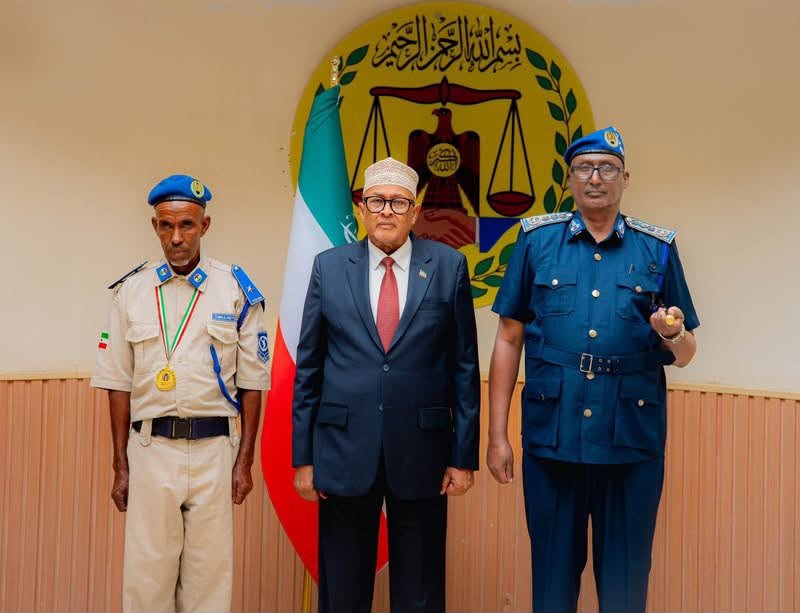
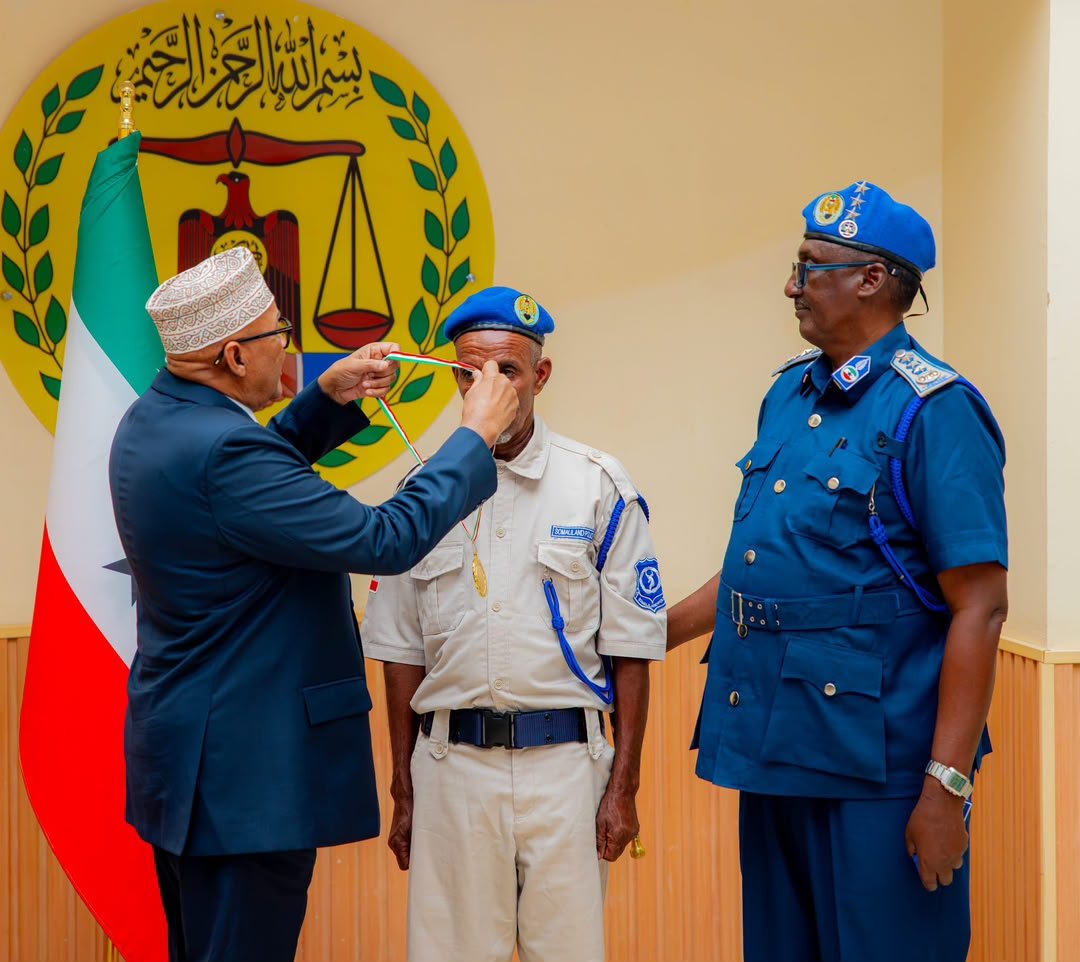
Hargeisa, Somaliland – The President of the Republic of Somaliland, H.E. AbdirahmanMohamed Abdillahi (Irro), today honoured a member of the Somaliland Police Force, Ahmed Geeddi Mohamed Abdi, with the Medal of Heroism, an additional award, and a promotion inrank in recognition of his remarkable conduct, which recently attracted widespread public attention across Somaliland.
Ahmed Geeddi earned national recognition after handing over the body of his murdered brother, together with the alleged perpetrator, to Somaliland security forces rather than seeking revenge. Furthermore, the President presented him with an additional award in recognition of his commitment to upholding the law, honoring his oath, and fulfilling his responsibilities as amember of the national forces.
During the ceremony, the President stated: “The greatest courage is the ability to exercise self-restraint in the most difficult circumstances. Despite the tragic loss of his brother, Ahmed Geeddi chose justice over revenge, handed over the killer to the authorities, and upheld the rule of law and national order.”
The recognition ceremony was attended by Brigadier General Abdirahman Abdillahi Hassan, the Somaliland Police Commissioner, who had earlier publicly acknowledged Ahmed’s actions. He invited Ahmed to his office and instructed the Sanaag Regional Police Commander to arrange his immediate journey to Police Headquarters so that he could be rewarded for his exemplary conduct.
The Story behind Ahmed Geeddi’s Remarkable Conduct
Ahmed Geeddi Mohamed Abdi, a soldier in the Somaliland Police Force from Erigavo, Sanaagregion, has demonstrated extraordinary courage, patience, and self-restraint in the face of a devastating personal tragedy.
Following the killing of his brother in Cilaamanto, a mountainous village in northern Sanaag, Ahmed, accompanied by his cousin, made a remarkable decision. He undertook an approximately 200-kilometre journey, transporting both his deceased brother and the alleged perpetrator from the remote and difficult-to-access area to the regional capital.
Upon arrival, he peacefully handed over both to the regional authorities and security institutions without subjecting the suspect to violence or retaliation. Despite the profound grief of losing his brother, Ahmed chose justice over revenge and placed his trust in his country’s institutions to handle the matter according to the law.
As a result, his actions attracted widespread admiration across Somaliland, with citizens praising his discipline, courage, and commitment to the rule of law. Religious scholars in Somaliland, particularly those at Erigavo’s Grand Mosque, offered prayers for him and called on the government to ensure justice and recognize his exemplary conduct.
Five Important Lessons Somaliland Can Learn from Ahmed Geeddi
Ahmed’s actions offer important lessons not only for Somaliland’s security institutions but also for society as a whole.
1. True courage begins with self-control. Courage is not simply about physical strength or the ability to confront others. It is also about controlling one’s emotions, particularly during moments of extreme anger, grief and personal loss. Ahmed demonstrated that true bravery means resisting revenge and allowing justice to prevail.
2. Revenge is not the only response to injustice. Even when someone suffers a devastating personal loss, peaceful alternatives remain available. Ahmed demonstrated that individuals can pursue justice through established institutions rather than taking matters into their own hands.
3. Respect for the rule of law must come before personal retaliation. Regardless of how deeply someone has been wronged, taking the law into one’s own hands risks undermining public order and perpetuating cycles of violence. By handing the alleged perpetrator over to the authorities, Ahmed reinforced the principle that justice must be administered through lawful institutions.
4. His actions reflect Somaliland’s legacy of traditional peacebuilding. His actions reflect Somaliland’s traditional culture of peace and respect for the rule of law. Ahmed deserves recognition alongside peace advocates such as the late Haji Abdi Waraabe, who captured his father’s killer but chose not to seek revenge. He is remembered for promoting peace and peaceful coexistence. Although their circumstances differed, both represent restraint, reconciliation and the preservation of peace.
5. Peace and stability should be recognized beyond political and security labels. International security assessments have sometimes classified parts of eastern Somaliland, particularly areas of Sanaag, as high-risk or red-zone areas. However, Ahmed’s actions demonstrate the importance of recognizing local commitment to peace, public order and lawful institutions, rather than judging entire communities solely through security classifications. His conduct is a powerful example of how citizens contribute to maintaining peace, even in geographically remote and challenging environments.
A Message to the International Community
Ahmed Geeddi’s story goes beyond an individual act of courage; it reflects Somaliland’s commitment to peace, justice and responsible statehood. For more than 35 years, Somaliland has maintained its own governing institutions, sustained relative peace, developed democratic processes and contributed to regional stability, despite lacking formal international recognition and substantial international support.
Meanwhile, the international community has continued to support Somalia despite its persistent failures in security, governance and the rule of law. This raises an important question about the unequal recognition of political realities and institutional achievements in the Horn of Africa.
Against this background, Laasgeel Institute asks the international community: “How much longer will the people of Somaliland be denied their legitimate rights and international recognition despite their achievements in democracy, the rule of law, peace and regional stability?”
Ultimately, Ahmed Geeddi reminds us that peace depends not only on governments and security institutions but also on citizens who believe in justice, restraint and their national institutions. His decision to choose justice over revenge reflects Somaliland’s culture of peace, social responsibility and societal maturity.
Laasgeel Institute for Policy Studies and Research Analysis (LIPS)
Insight | Hargeisa, Republic of Somaliland
Contact Laasgeel Institute (LIPS)
Website: https://laasgeelinstitute.com
Email: info@laasgeelinstitute.com
X (Twitter): @LasgelInstitute